
Body Condition Scoring
Monitoring body condition can give an immediate indication of the current physical state of an animal, which is practically useful for the management of feeding and exercise regimes. A visual and hands on assessment of a horse’s body condition takes into account the amounts of body fat which are present and the level of muscle tone and development overall. The body stores excess dietary calories as fat, whilst dietary protein supplies amino acids which are the building blocks of muscle and other body tissues. Assessing the amount of fat the horse is carrying can give us a good indication of how well its calorie requirements are being met.
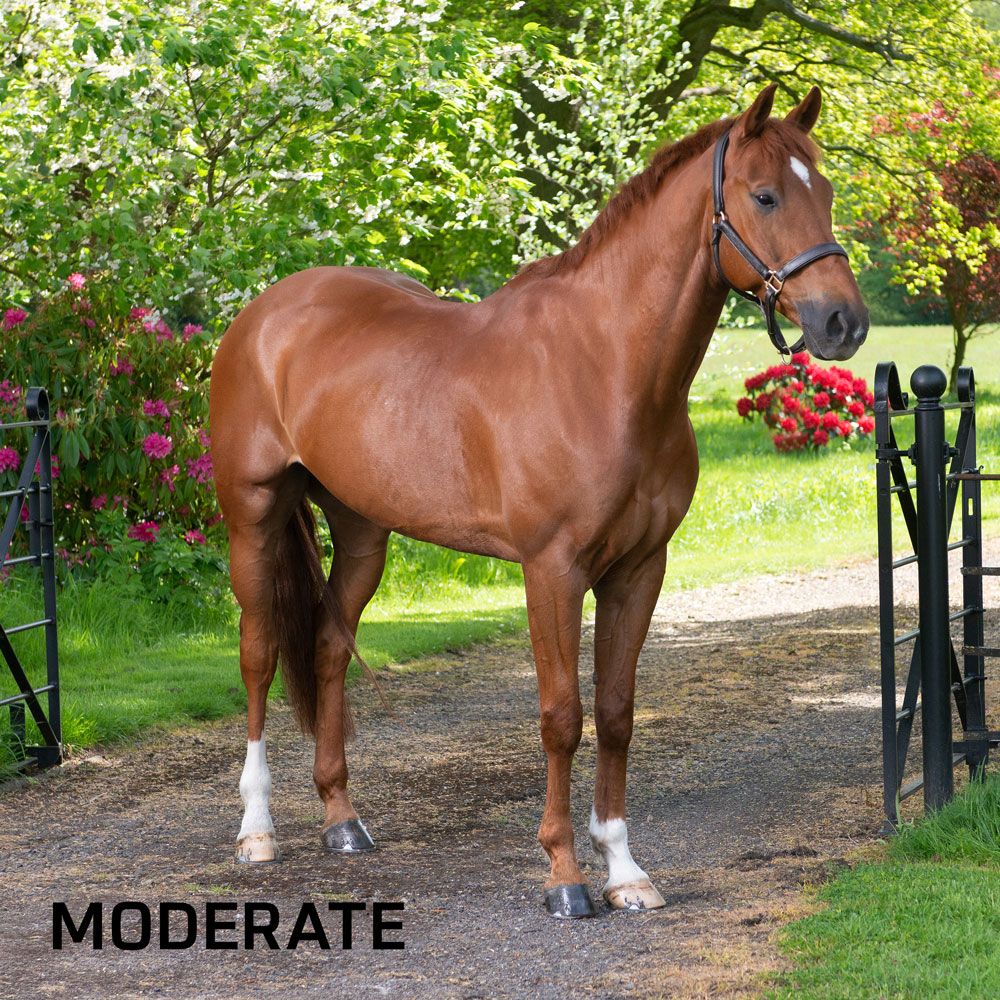
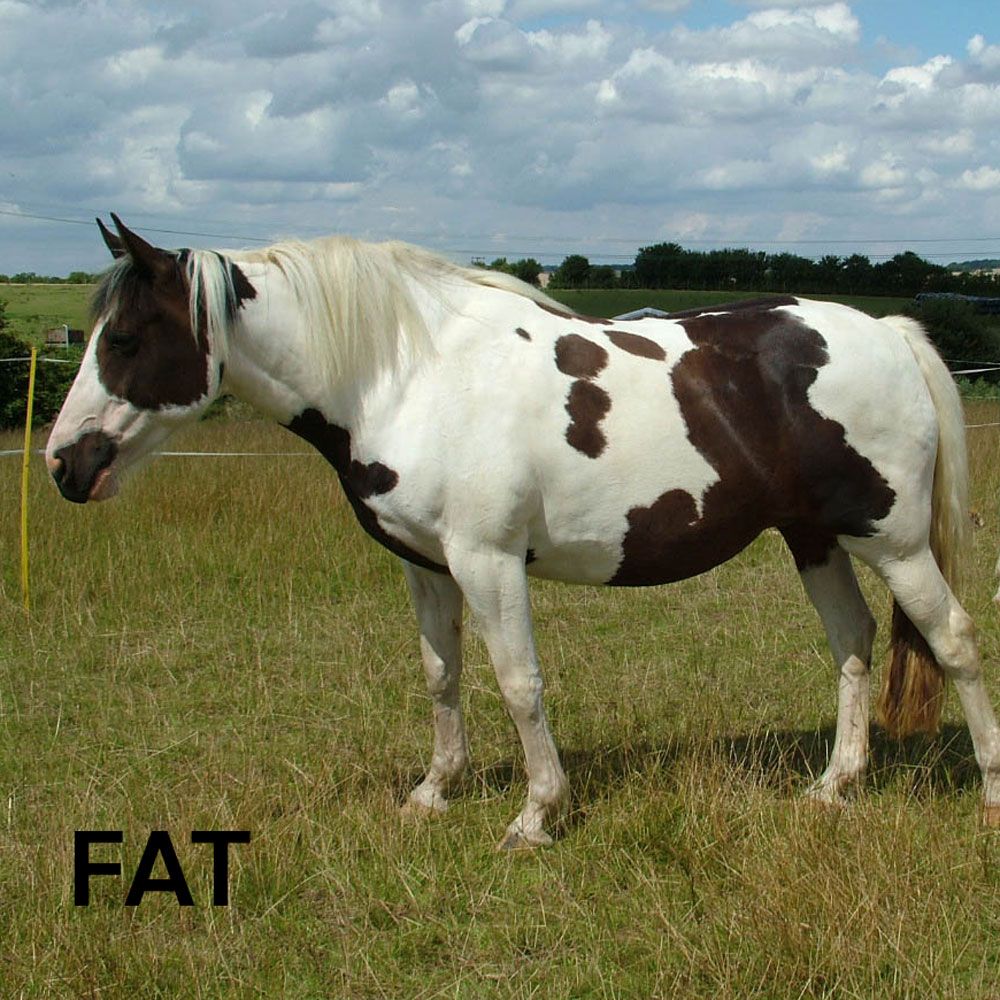
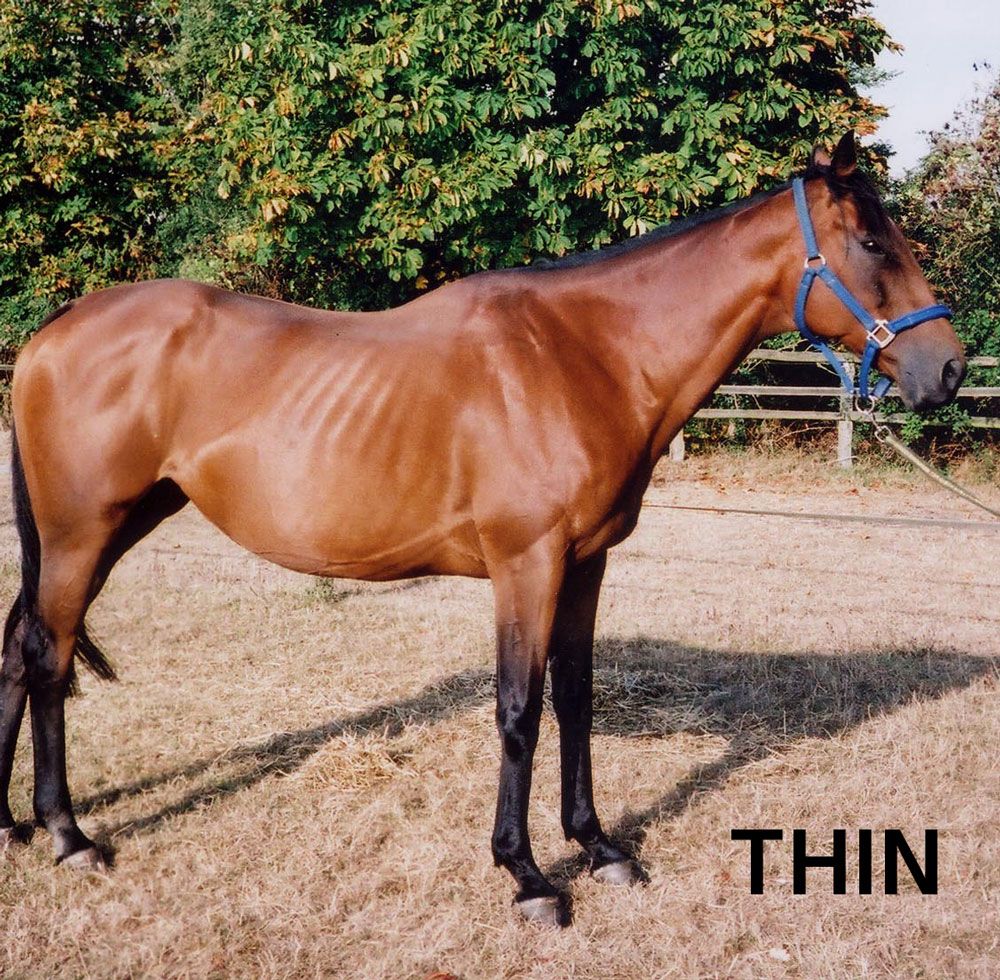
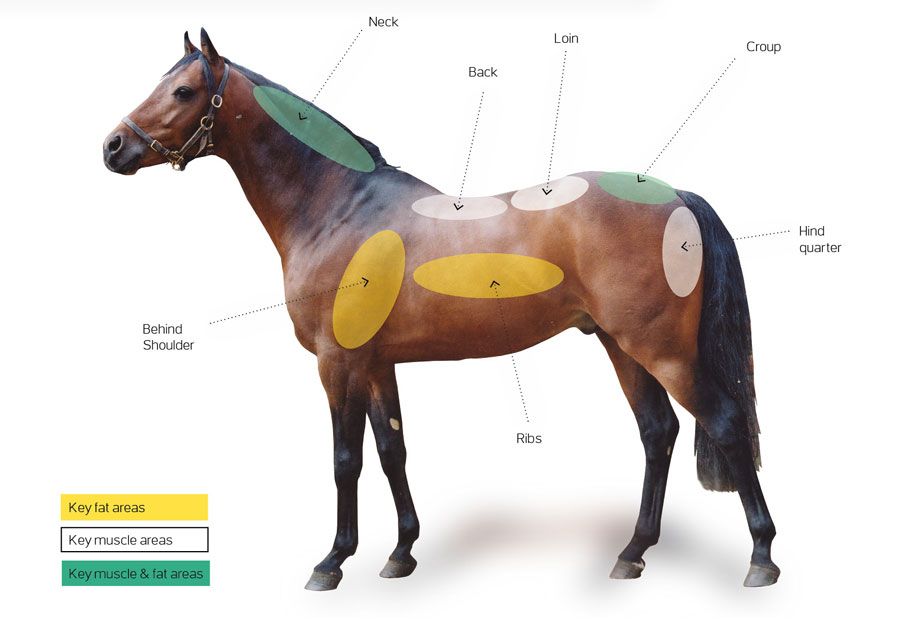
Evaluating Fat Thickness & Muscle Development (top line)
Body Condition Scoring (BCS) is a useful and objective method of assessing your horse’s overall fat covering and should be used alongside a weightape or weighbridge reading to monitor progress. Looking at the key regions indicated below, the horse can be scored on a scale of 1 to 9, with a score of 1 being “very thin” or “emaciated”, and a 9 being “extremely fat” or “obese”. Horses with a score of more than 7, out of 9, will typically have more than 20% of their bodyweight comprised of fat. The ideal target is a score of 5, which indicates that the horse is just right and not under or overweight.
The key areas to consider are:
Neck (see also Cresty Neck Scoring)
Withers
Over the shoulders
Ribs
Over the back/top line
Over the tailhead and the hindquarters
These 6 areas should, ideally, be scored individually and an overall score, out of nine, assigned based on an average of all the areas (ie. add up all 6 scores and divide by 6). It is important to get “hands-on”, as well as visually assessing your horse, as this will make it easier to distinguish between fat and muscle. Remember that a very large or distended belly is not typically an indicator of fat and instead may be due to the horse eating large amounts of coarser fibre or a lack of physical fitness and core strength.
Once you have body condition scored your horse a few times, it will become easier but, if you are struggling, ask your nutritionist or vet for help. You could also team up with friends on the yard and help each other, using the images and descriptions below as a guide.
It will also be worth giving your horse a Cresty Neck Score, alongside its Body Condition Score.
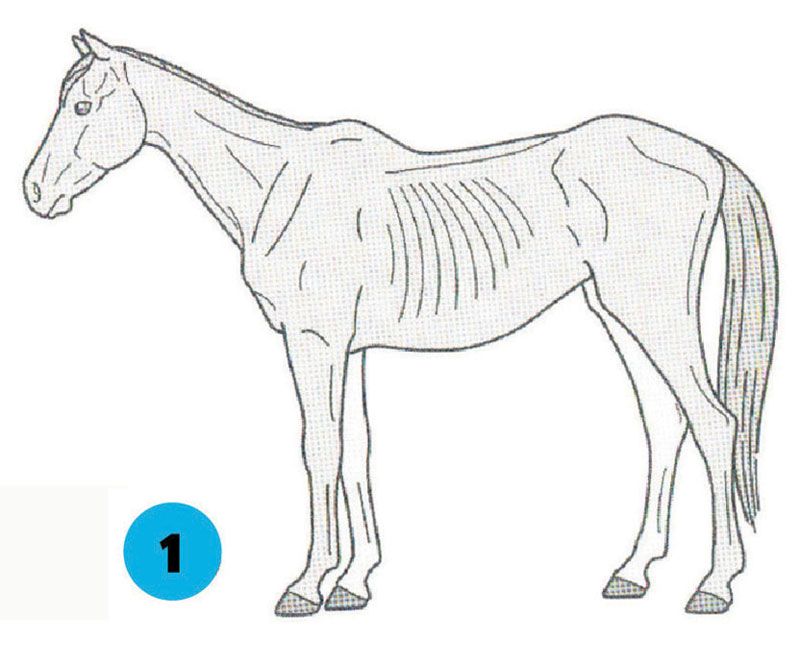
1. POOR
Behind Shoulder
Bone structure easily noticeable
Ribs
Ribs protruding prominently
Back/Top Line
Spinous processes projecting prominently
Tailhead & Hindquarters
Tailhead, lower pelvic bones, and hip joints projecting prominently
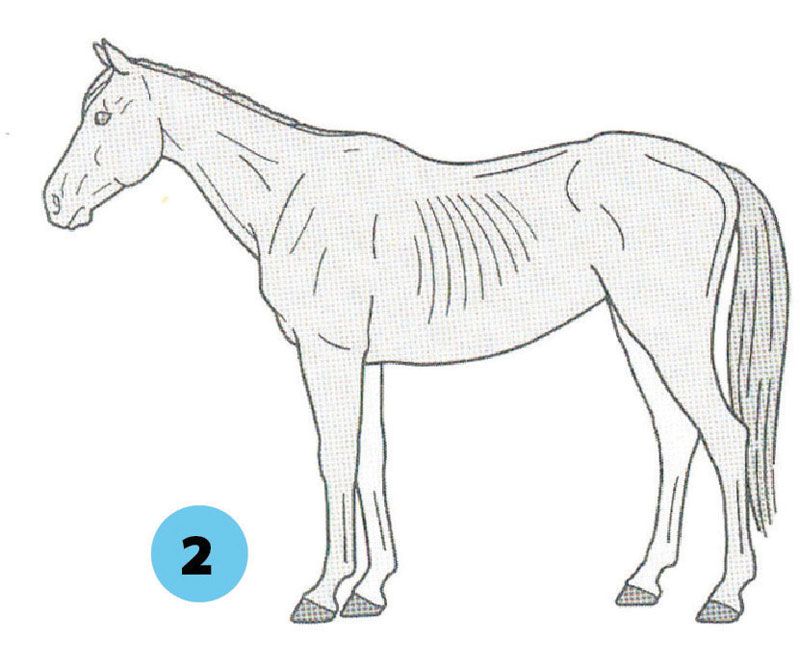
2. VERY THIN
Neck
Bone structure faintly discernible
Withers
Bone structure faintly discernible
Behind Shoulder
Bone structure faintly discernible
Ribs
Ribs prominent
Back/Top Line
Slight fat covering over base of spinous processes
Tailhead & Hindquarters
Tailhead prominent

3. THIN
Neck
Neck accentuated
Withers
Withers accentuated
Behind Shoulder
Shoulder accentuated
Ribs
Slight fat over ribs. Ribs easily discernible
Back/Top Line
Fat buildup halfway on spinous processes, but easily discernible.
Tailhead & Hindquarters
Tailhead prominent but individual vertebrae not visible. Hip joints appear rounded, but are still easily discernible.
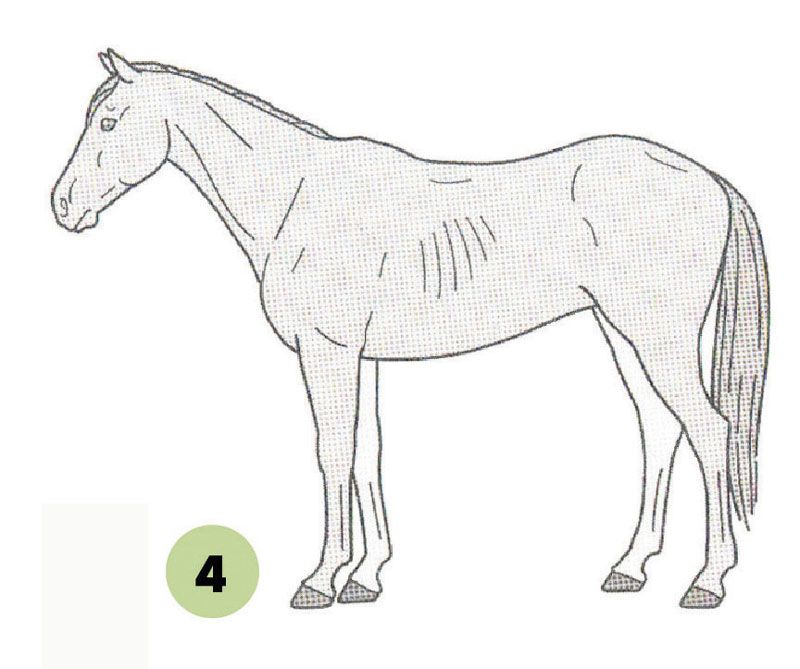
4. MODERATELY THIN
Neck
Neck not obviously thin
Withers
Withers not obviously thin
Behind Shoulder
Shoulder not obviously thin
Ribs
Faint outline of ribs discernible
Back/Top Line
Peaked appearance along back
Tailhead & Hindquarters
Prominence depends on conformation. Fat can be felt. Hip joints not discernible
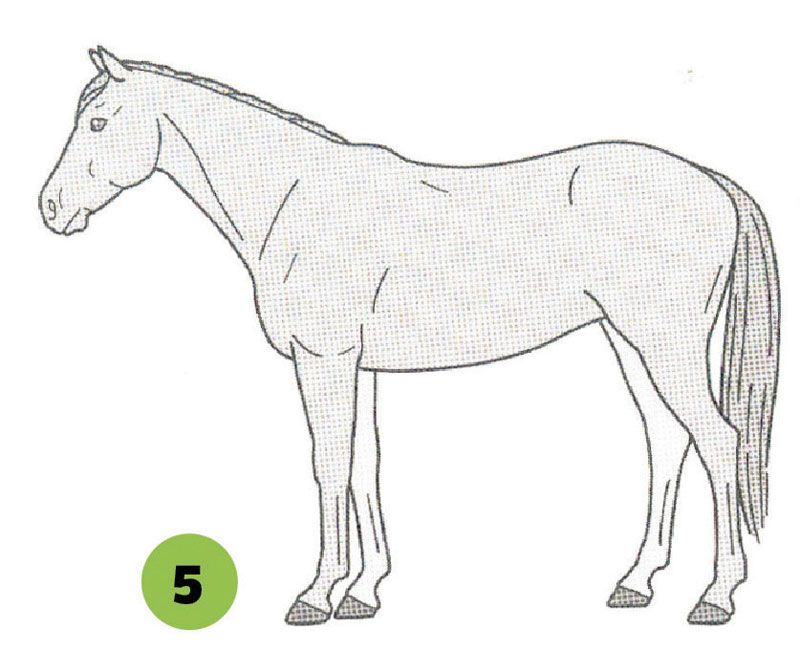
5. MODERATE
Neck
Neck blends smoothly into body
Withers
Withers rounded over spinous processes
Behind Shoulder
Shoulder blends smoothly into body
Ribs
Ribs not visible but easily felt
Back/Top Line
Back is level and the spine can be felt
Tailhead & Hindquarters
No fat pads around the tailhead
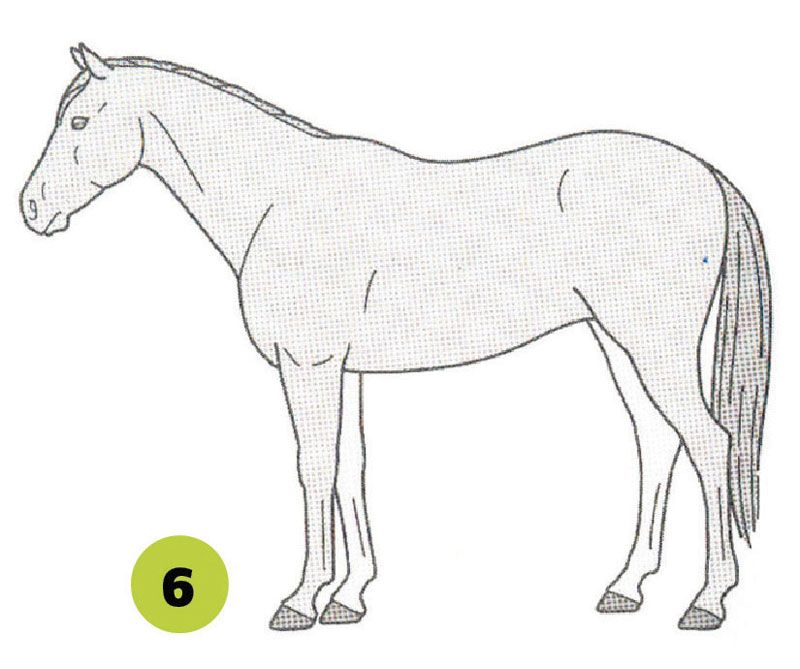
6. MODERATELY FAT
Neck
Fat beginning to be deposited
Withers
Fat beginning to be deposited
Behind Shoulder
Fat beginning to be deposited
Ribs
Fat over ribs feels spongy
Back/Top Line
May have a slight groove down back
Tailhead & Hindquarters
Fat around tailhead feels soft
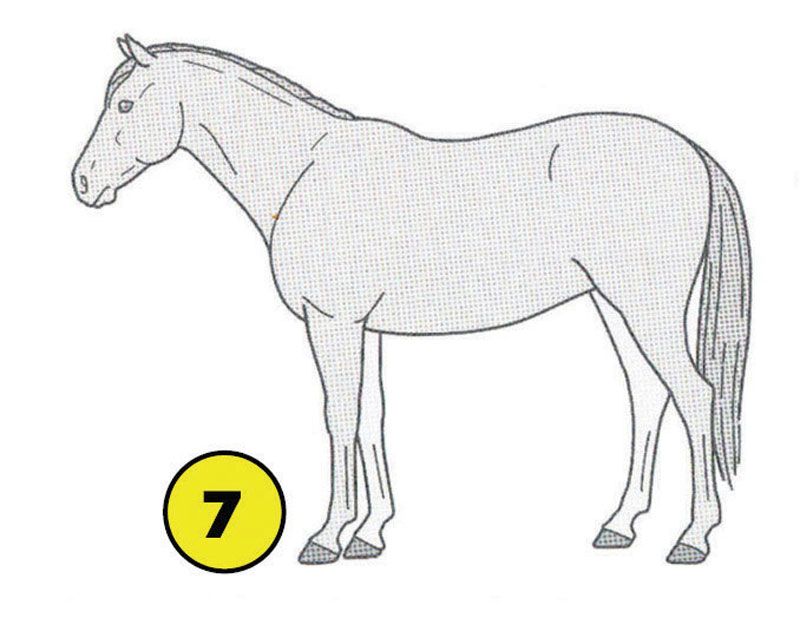
7. FLESHY
Neck
Fat deposited along the top of the neck and starting to feel more spongey
Withers
Fat deposited along withers
Behind Shoulder
Fat deposited behind shoulder
Ribs
Individual ribs can be felt with pressure, but noticeable fat filling between ribs
Back/Top Line
May have crease down the back
Tailhead & Hindquarters
Increased fat pockets over the tail head
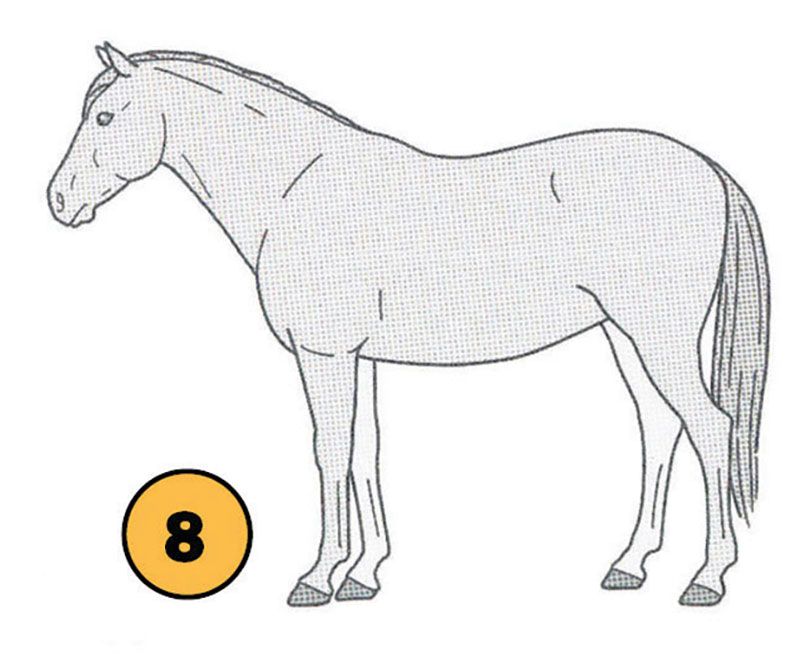
8. FAT
Neck
Noticeable thickening of neck
Withers
Area along withers filled with fat
Behind Shoulder
Area behind shoulder filled in flush with body, larger fat pads
Ribs
Difficult to feel ribs
Back/Top Line
Positive crease down the back
Tailhead & Hindquarters
Fatty pads around the tail head and over the ribs; “apple-shaped” quarters
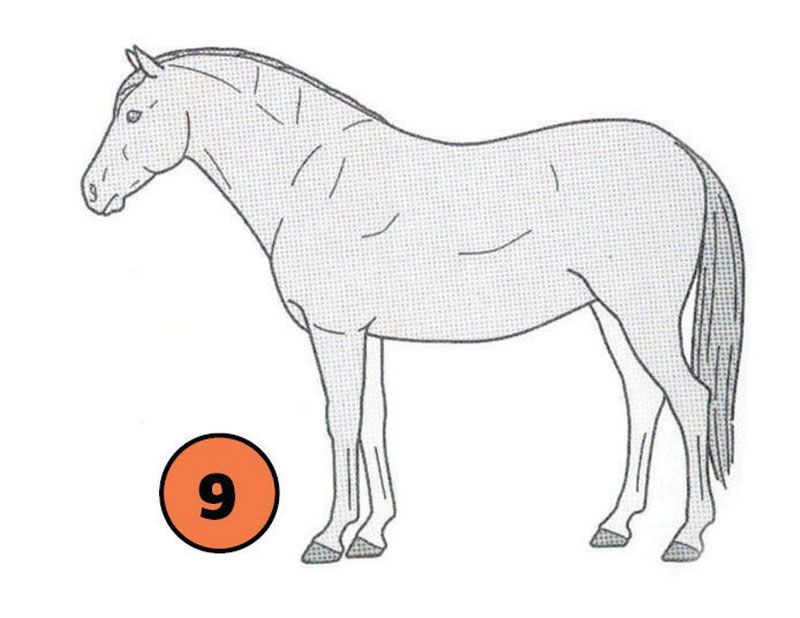
9. EXTREMELY FAT
Neck
Bulging fat, neck is very wide and firm
Withers
Bulging fat
Behind Shoulder
Bulging fat
Ribs
Large fat pads over ribs
Back/Top Line
Obvious crease down the back
Tailhead & Hindquarters
Large fat pads over the hindquarters and tailhead area, definite “apple-shaped’ quarters
TOP LINE ASSESSMENT
This Top Line Assessment has been developed by Baileys, in conjunction with Don Kapper of Progressive Nutrition, Ohio, USA, and is used in the States to assess the overall muscle development of horses of all ages. The horse’s top line (musculature) from the neck, over the withers and back to the hip and stifle area, is assessed.
As a guide, a Top Line Assessment of Good to Excellent indicates that the horse’s diet is supplying sufficient or optimum levels of good quality protein, whilst an assessment of Adequate to Poor indicates that the diet is supplying insufficient levels of quality protein to meet minimum requirements.
A strong healthy musculature and top line are essential if a horse is to perform to the best of his ability and can only be built by correct training if the diet supplies the necessary range of amino acids from good quality protein. Ensuring a horse’s dietary protein requirements are met at all times will help maintain top line and muscle tone, even during lay-off periods.
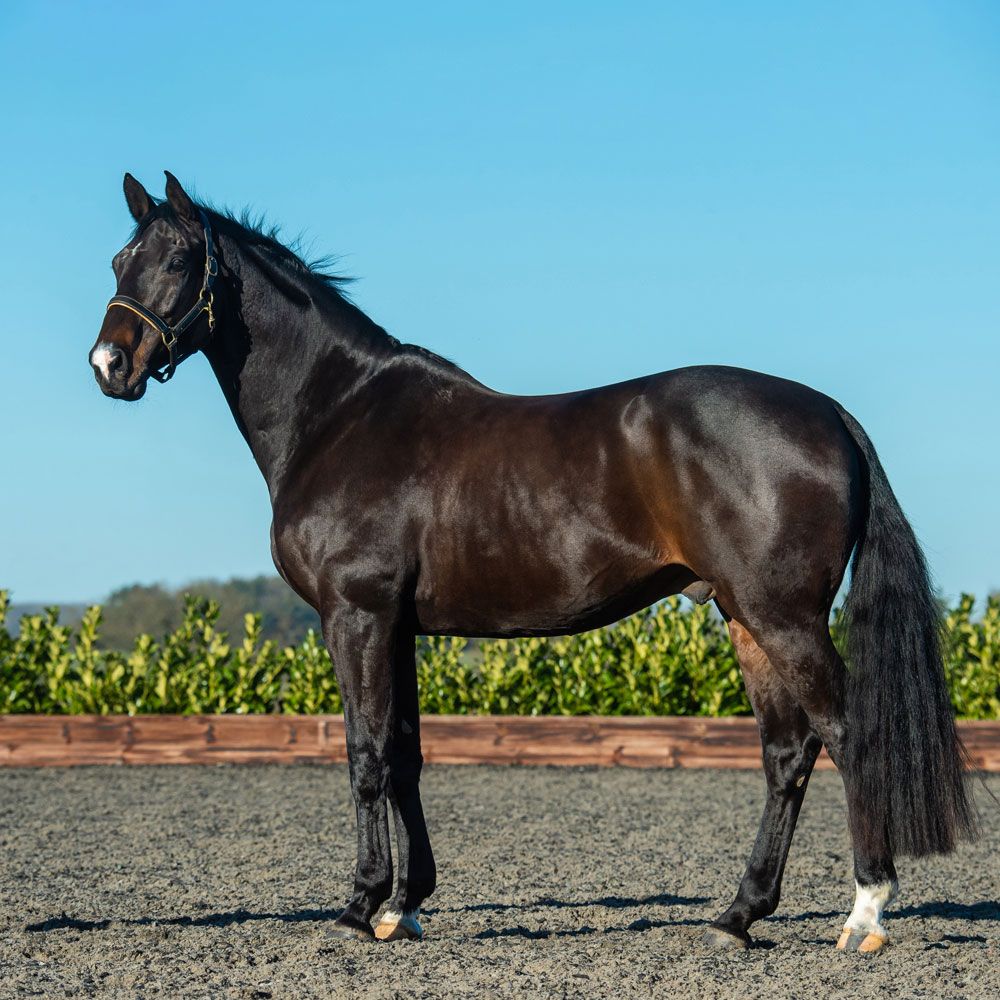
Top Line Grade =
EXCELLENT
Diet providing optimum levels of quality protein
- This horse has ideal muscle development for its body type.
- The neck has a smooth or convex top line and blends smoothly into the shoulder and withers.
- Muscle is full each side of the withers and along the spinal column so that the vertebrae cannot be seen.
- The hip is full and the stifle muscles are defined.
- There is no hollowness between the hip and stifle.
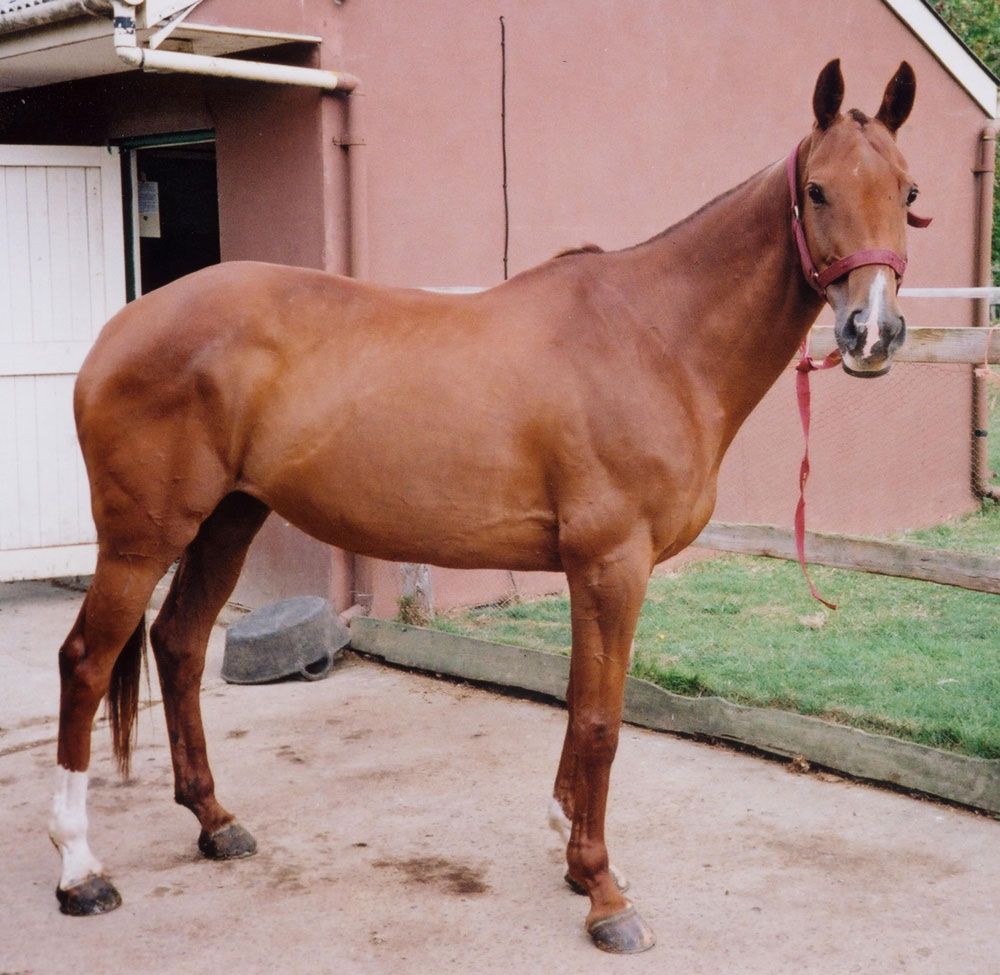
Top Line Grade =
GOOD
Diet providing sufficient levels of quality protein
- This horse is adequately muscled although there are some areas of inadequacy.
- The neck has a straight top line and there is some hollowing where the neck meets the shoulder.
- There is hollowing each side of the withers and along the back.
- The hip to stifle area is flatter.
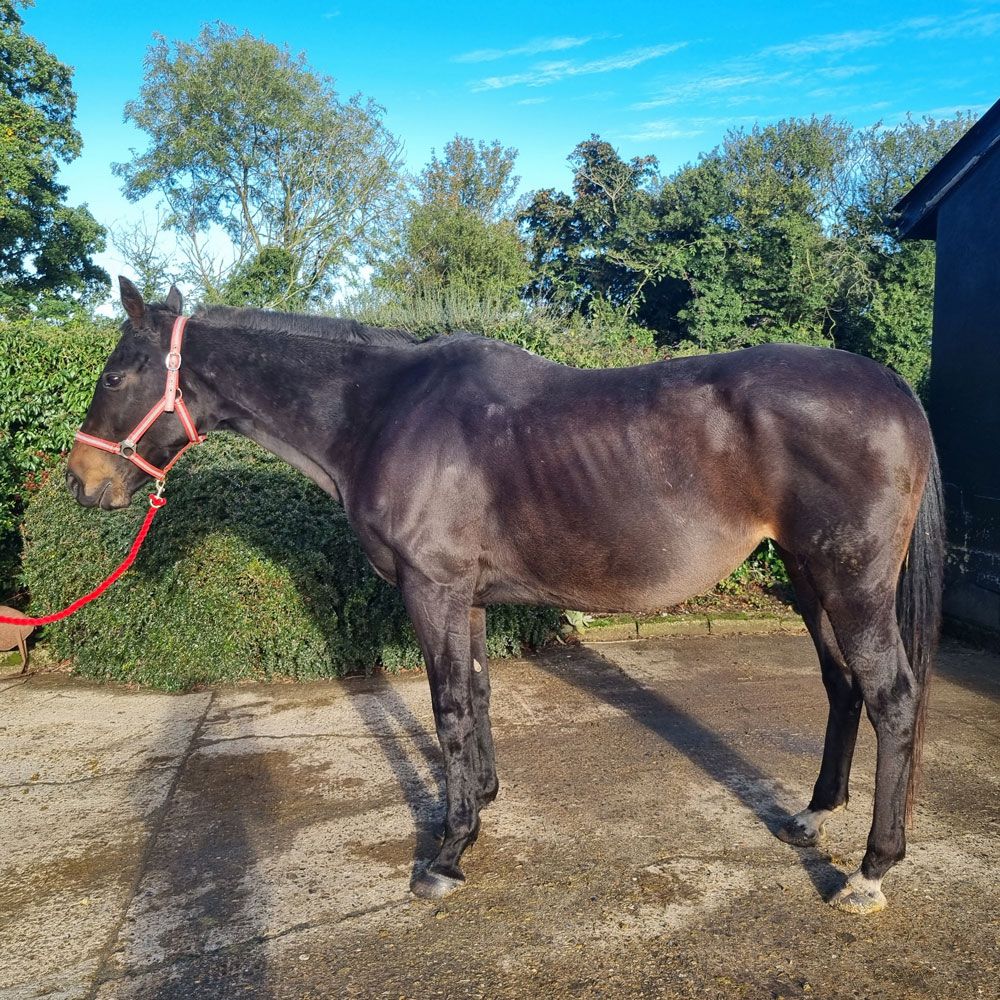
Top Line Grade =
ADEQUATE
Diet may not be meeting horse’s minimum protein requirements
- The neck has a straight or concave top line and is weak.
- Muscle each side of the withers are sunken.
- Back and loin areas appear bony.
- Vertebrae will be higher than the muscles beside them.
- Muscling over the hip and hindquarter is adequate.
- The hip to stifle area is weak.
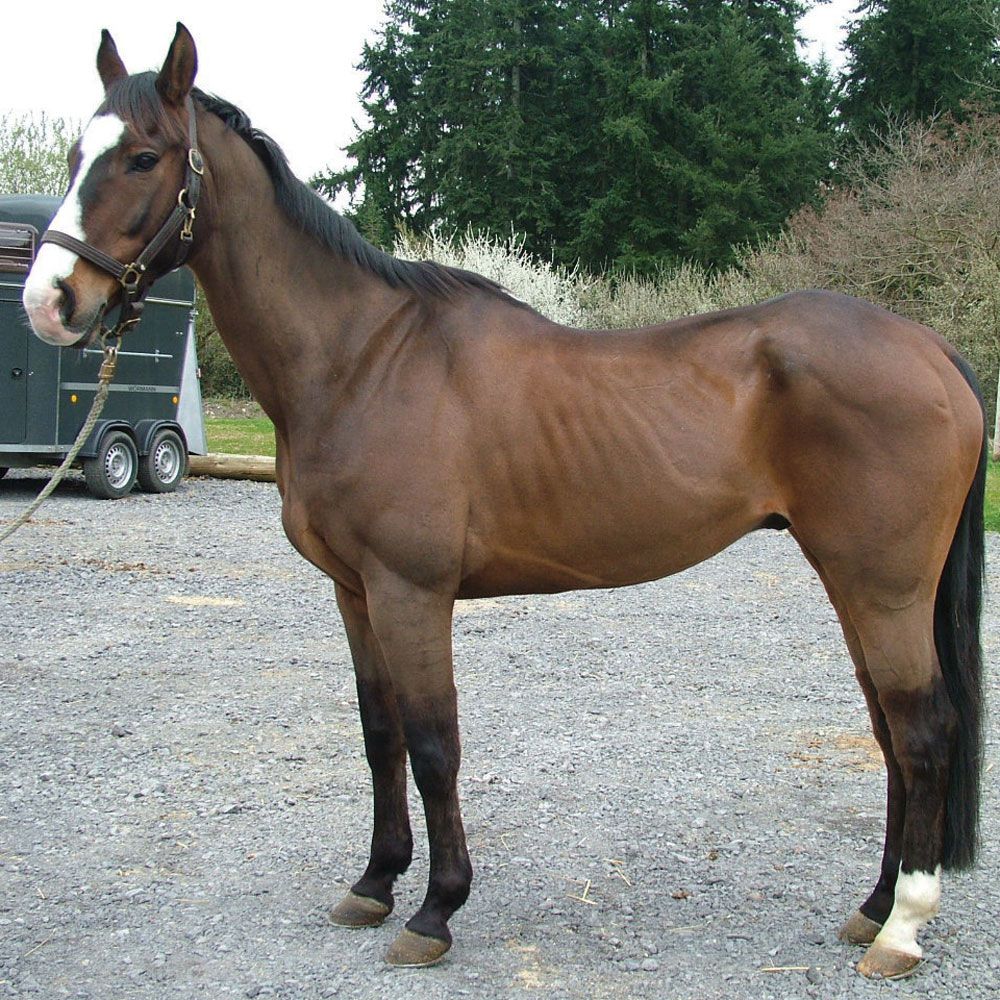
Top Line Grade =
POOR
Diet not meeting horse’s minimum protein
- The neck has a concave top line and is hollowed.
- Poor concave muscling over the entire topline from withers to tail.
- The hip bones and the top of the vertebrae on the croup are pointed and the muscles between are sunken in.
- The width of the stifles is narrower than that of the hips.
Having evaluated your horse’s Top Line, Body Condition and Cresty Neck Scores, you will have a good idea of where your horse deposits fat and builds muscle, which will help identify areas for weight gain, loss or top line development.
Key considerations that may influence the horse’s natural body shape include:
- Breeding Status
- Workload
- Underlying clinical issues
It is, however, important to remember that is difficult to focus weight loss or gain in a particular region of the body and all horses are individuals – just like people!
If you would like help with choosing the most appropriate feed, use our online Feed Finder now, or you can call our friendly Nutrition team on 01371 850 247 (option 2) or nutrition@baileyshorsefeeds.co.uk
